Tuesday, October 13, 2015

A small incident of great significance


Today in class, a little boy of 7, whilst playing with his classmates from first grade, fell and knocked his head hard against the sharp metal corner of the whiteboard hanging at the back of the classroom.
The wound was severe. When he came to the teacher's desk, his cheeks streaming with tears, Anne and I, who were talking to the teacher, flinched and gasped with fear. A patch of gushing blood the size of the little boy's fist covered one side of his head. When I saw it, I instinctly closed my eyes and turned my head away in terror.

The teacher laughed. What a very strange reaction. Perhaps, having exercised his profession for many years, he was used to accidents in the classroom, and this kind of wound no longer intimidated or shocked him.

In any case, Anne and the teacher stayed with the child, whilst I rushed home to get my First Aid Kit. We did our best to clean the wound but that could only do a limited amount of good to an open wound. Anne, who has some notions of first aid and nursing, said that he will need stitches.

The child gradually quitened down, and we took him back home to his family. When his mother saw him, she merely frowned. We explained the incident.

"Who pushed you?" his brothers asked him.
"No-one," the little boy shook his head shyly.

"Children are always fooling around and misbehaving." said his grandfather as he came out of his room.

The adults in the family seemed to take this as a normal matter of course. They didn't manifest either pity, empathy or exceptional concern for the child. These things happen, and they should not and will not disrupt the daily grind of their lives.

We explained to them that it's an open wound, and if it gets infected (which, with all the insects, dust on the road, and the general living conditions in the village, is more than a probability), it could be a danger for the child. We offered to take him to the nearest centro de salud in Teleman.

"Do you want to go?" the mother asked the child. The little boy shook his head vehemently, a new wave of tears invading his terrified eyes.

"You see, he doesn't want to go." she told us. "But maybe he doesn't need to? Maybe the wound will be cured naturally."

We didn't understand this reaction at first. Of course no child would willingly go to a hospital to endure the pain of getting stitches! But if the adults understand the gravity of the situation, they must impose that decision instead of following the child's desires.

But of course, it's not that simple. The great majority of families in the village don't have the money to pay for proper treatment. In all honesty, with the scarce and unreliable information on medical treatments, it was unclear to us how much exactly this sort of medical attention would cost. Some say that you would only have to pay for the thread, and the stitching is done for free. Others insist on the fact that the anaesthetics would cost a formidable sum of money. The worst thing is that it seems that even the families have no definite information on which to base their decision. And they are not willing to take the risk.

But money is just one aspect of it. The other is, as ever, culture. A friend of ours told us recently of a "parabole" which sums up the Maya Q'eqch'i's approach to child injuries. Imagine an outdoor garden party with adults sitting outside enjoying drinks and conversations, and children playing around them. A child runs towards them through a field, falls down into the mud, hurts himself badly, and starts crying. In Western culture, most adults would rise to their feet, and rush to the child's side to see if he is well, the parents in first line. The reaction of the Q'eqch'is, however, is pure, unrestrained, hysterical laughter. Oh, look how dirty he is! Oh how funny the way he fell down!

It's strange to realise this. But we are not here to judge or to establish cultural or ethnic hierarchies. We are in their land and in their homes. We must do our best to understand them, despite our differences, although it is no easy task.

As we stood there, comforting the little boy, and putting a bandage around his head to cover his wound, Anne and I were facing a difficult moral choice. What is the right thing to do in this situation? Take the child to the medical centre despite his family's apparent reticence, to make sure that the wound was treated properly? Or leave this family to take care of their children the way they want to, without our intervention? After all, haven't they been living here for hundreds of years, before "we", Westeners, came along? They're surviving just fine without our help, despite the arduous and challenging conditions they live it.  If they judge that it is not necessary to take a child to receive medical help for a wound of this kind, don't they know better?


In the end, a certain degree of humbleness and resignation made Anne and I leave things as they were. We thought that in any case, it would not be right to go against the family's wishes, even if we sincerely believed it to be for the greater good. The worst attitude to adopt in an intercultural relationship is cultural imperialism. "We know better than you" is not a slogan we wish to adhere to.

So, we kneeled infront the little boy, looked in his eyes and told him: "Well, you've become a real man now!"
And for the first time since the incident, he smiled.

"You're going to be strong, aren't you? And no more tears!"
He nodded his head, his smile widening, tears still glistening in his eyes.

"Thank you for bringing him." said his elder brother.


Indeed, the entire family thanked us for our care. They seemed touched that we would take the time to bring their child back to them after – what appeared to them – such an insignificant event.

As we said goodbye and walked out of their house, somehow I felt closer to them. It's funny, how  a small, unnoticeable and banal incident can bring people together, open a window onto the culture of those people, and make us reflect upon their lives as well as our own.

In the end, we still don't have the answers to the many mysteries of cultural interaction that living side by side with the Maya Q'eqch'i community has cast us into. But the beauty of this experience is that it makes us ask those questions that truly matter. And for that and much more, we are very grateful.

Written by: Katerina


Sunday, October 11, 2015

New team, new beginnings, new season's greetings

Marta completed her volunteership with Lichutam and left us in September. Since then, a new team has arrived! We are now the Fantastic Four of El Polochic Valley: Anne, from Germany, Georgia, from Greece, Patrick, an Irish gentleman, and Katerina leading the team.

Here are the our new volunteers' impressions of the first week.


A First Week in Polochic, by Patrick

My first full week of life at Lich'utam has just come to an end. And finished in style I might add. I'm the only male in the house, living with three girls from different parts of Europe. “So lucky” you might be thinking, and you might be right, but our notions of lucky might be slightly different!
As the only male I get my own bedroom, while the three girls share one large bedroom. For me that's pretty darn lucky.

At the end of last week, at the beginning of October, we all met each other over the space of three to four days. This was a nice touch; to start volunteering with people at the same time, to share the same experiences and to be able to talk about all the novel things as they occur to all of us, at the same time.

This week we spent our mornings in the classroom, acting as assistants to the teachers, or in my case, a very old student. I found my thirty one years of life experience close to useless when Anna, my teacher, started teaching in the indigenous language Quich'i. Even as she taught in Spanish, I noticed many of the fourth graders in my class spoke and wrote better Spanish than me. However in Maths, I excelled, I was able to move around the class, supporting the students with their maths formulas, equations, multiplications and fractions. Maths in my class has become the universal language.

Our school provides education for children from kindergarten to sixth grade. I'm helping the fourth graders. Fourth grade is a mix of ages. There are ten year olds and there are fifteen year olds. Many students struggle with literacy and are easily distracted in the classroom. The result is a classroom of students of different ages. In one case, a gentle fifteen year old boy has been passed out by his younger brother who is now thirteen and a grade above. I hope the elder passes his exams this week.

After school, we rest, cook lunch and return to the kids in the afternoon. They are always very happy to see us. We plan on doing activities with them to reinforce their literacy and maths, computer skills and personal growth. It should be an interesting, challenging but very positive summer.

To top of the first week, we four visited one of the Lich'utam founder's family members. We stayed on his farm for some rest and relaxation and saw the beauty of Polochic from the air. Soaring up into the sky in his two person flying trike was a treat I won't soon forget.  


My New Far Away Home, by Anne
 
Stunning landscapes, swarms of mosquitoes and of mischievous kids – little rascals –  that is how I got to know Nueva Mercedes during my first days. 
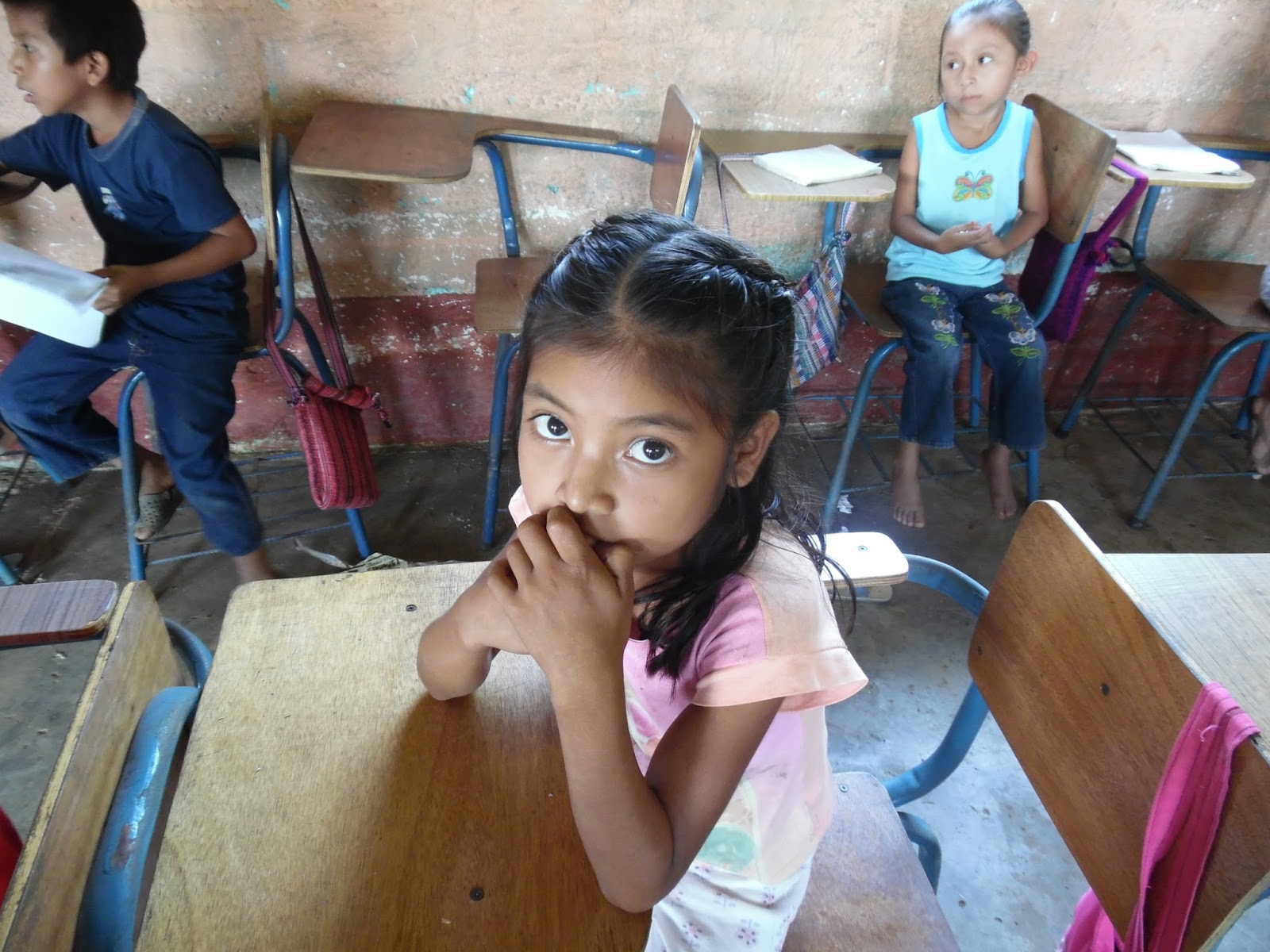
In order to gain new experiences, open my mind and see more of the world after finishing my studies, I left good old Germany for faraway Guatemala. I spend my first month in Antigua, a beautiful historical colonial city, to improve my very basic Spanish skills before I started my volunteership. In week four I had to say “¡Hasta la vista, Antigua!” and “¡Hola, Nueva Mercedes!”. Together with Katerina, Georgia and Patrick, my new house-mates and co-volunteers, we set off on the long journey crossing the whole of Guatemala to reach the little village. After a typical Guatemalan bus ride (a lot of fun for me!) through small streets, overfilled cars and many shaking bodies, the tropical heat and a stunning mountain landscape welcomed us – the motto here is “Natur Pur”. Our first stop before we saw our new house was the colourful Teleman market in order to refill the empty fridge at home and provide for our survival in the first week there. An inviting wooden hut will be our home for the next months to come. Spiders, lizards and toads received us in a friendly manner – although it takes some time to get used to. But in contrast to my worst fears, up until now I´ve only seen snakes and scorpions just from afar – and let´s hope it will stay that way! The following day,  we went on the first visit to our new workplace – the Nueva Mercedes primary school. Hundreds of big, dark round eyes stared at us accompanied by countless “¿CĂłmo te llamas?“  and “¡Bonito tu pelo!“.


 A very particular welcome indeed. 

Soon, the first encounters, a few games and conversations with the kids made it clear to me that there is potential here. And hopefully we can help to foster this potential at least in some of the kids. Unfortunately it is not always that easy. The Guatemalan way of life in many aspects is incomparable to the German or European one. Especially regarding education there is so much to be done. Poverty and complicated living conditions don´t make it any easier. But some motivated and engaged people, who I have had the privilege to get to know during this short time fill me with hope. Hope, that it is possible to make a difference if we work together – not only here in Guatemala but globally. And even if it´s not feasible here “die Welt einzureiĂźen” (to change the world), I am still happy for every single smile I can bring to people´s faces. That´s why I am really looking forward to the next five months that I will be here.
Guatemala, here I am – show me what you´ve got!


 Georgia's first impressions:

Strongest first impression: the kids! Those little faces that took them about 2 minutes to get to know us and since then they did not hesitate at all to call our names and ask us to play with them. Even though the conditions at school are not easy, everyone is trying their best with the resources they have; the teachers, the kids, and us. And of course, it is worth it since you see after a while some results of your work. For example, at times, during our afternoon activities in the primary school, a few distracted kids, not interested in the ongoing group activity, ask for our help in doing their homework. I remember one kid who, the first time I asked him to write down what the teacher was saying, didn’t like it and made fun of it. However, after the third day he was already used to my presence and he started asking me to approve what he had written. Another example is that a few of them after finishing their exercise come to me before and after they show it to their teacher in order to get a big “¡Perfecto!” o “¡Muy bien!”. They really seem to enjoy that moment judging by their big “¡GracĂ­as!” smiles. 


In general, I have really enjoyed my first days in Nueva Mercedes and even though it is sad that the school year is over in the second week of October,  I am looking forward to starting our projects and morning activities with the kids. Hopefully, there are going to be many of them. This is why we tried our best to get their attention, make them like our activities so that they are motivated to keep on coming to our extracurricular educational afternoon sessions where we make them discover the world!


Saturday, August 22, 2015

Secret Formula


All those weeks we were looking for a secret formula that would bring us closer to the children. It's not easy to organise afternoon activities. For several reasons. Firstly there is a wide range of kids from all the grades. Secondly, you never know how many of them will come. Each one has different needs and especially the youngest ones always try to get the volunteers' attention at all cost.


And then, one day we came to school at 3 pm, having prepared activities for 1st and 2nd grade. No-one showed up, there were only some boys playing football. So instead of doing what we prepared, we decided to think for a little what we would enjoy ourselves if we were them.
We remembered the most dynamic and interesting games from the days where there was no power in the universe that could make us go home before the sunset. 


We focused on building a team, on making all of us work together. As a result not only the boys, but we as well enjoyed spending the time there a lot. We taught them new games and they liked them so much that afterwards we finished they gathered around us asking for another activity. Even after we left we could see them playing the games they had just learnt. 


The next day they were already waiting for us. We took a string, held it 1.5 above the ground and asked them to cross it over to the other side. At first the children didn't seem to be so sure about the excercise but soon enough they came up with innovative ideas on how to do it. They were creative and helped each other. We also had a chance to observe their behaviour in a group.


Now, more than before they come to talk to us during the breaks at school. Step by step we gain their trust. From now on it'll be easier for us to work together on their curriculum. This week we learnt that we can only succeed in working with this community if our relationship with it is based on mutual trust and the willingness to understand each other despite of any communication difficulties. 


Thursday, July 23, 2015

Marta's first weeks in the shoes of a volunteer


I like looking at the photos Katerina took on my first day with kids. I didn't know anything about them, each of them was just a name I couldn't remember no matter how many times they would repeat it, couple of big brown eyes staring at me and a bunch of hands touching my skin. Now I'm starting to develop a special bond with them, I'm beginning to understand their way of working.


At this point I must tell you about a person that definitely marked my first weeks in Mercedes. It was one of the girls from the first grade. The first time I met her, we started working on maths and I had real difficulty in explaining simplest equations to her. Then, the next day I spent an hour trying to teach her how to write a letter 'e'. No matter how many times she repeated it after me, she couldn't get it. I felt horibly frustrated for the first and the last time during my experience so far. I couldn't understand why something so obvious to me, was so difficult for her. Now I've been working at school for the last three weeks and although the girl still has problems with 'e', we became friends.


Now I understand that the kids' learning environment is completely different to the one I was studying in. The teachers often let them go earlier than they should, the breaks are longer for no reason at all, the classes sometimes don't take place at all. Besides, the children are often undernourished and unable to focus on a subject. But also, for example, the desks are designed for the right-handed people and the left-handed ones, like the girl I was talking about before, find it harder to adjust to that. Assisting at school requires huge amounts of patience and understanding.
What I find important is the ability to forget about oneself while working with children. Bringing problems and miseries to the classroom makes it extra hard to help them efficiently. And what are the problems the volunteers have to deal with? Water and power cuts, colonies of ants, tropical animals, and the most importantly, longing for all the places we call home and all the people we love.
The village is very small and apart from a school and a church, there is nothing else there. This means that what we can do in the evenings is limited to spending time at home, reading books, watching movies and talking. Moreover, it is hard to become considered part of the community by local people. They speak Q'eqch'i and sometimes I get the impression that because of our cultures being so different, they don't think much of two european girls who don't understand them and their life and ask for help with problems, that make up a part of their everyday life. But, this is also one of the reasons why i came here. I realise this is a unique opportunity for me to get experience in the field I'd like to work in in the future, which is teaching, to live in a reality completely different to the one I have lived in all my life, to develop my language skills and to grow as a person.
Despite of all the difficulties, I've never regretted coming here and I doubt I ever will. Everyday life in Mercedes takes a lot from you, but it gives you much, much more than you could ask for.